Stagnant Production and Tight Credit: Is Now the Time to Upgrade Your Injection Molding Line?

Industrial Performance Now
Manufacturing output has largely stalled, with the Federal Reserve reporting that industrial production for the manufacturing sector remained flat as of May 2026 Federal Reserve Board. Furthermore, capacity utilization rates are currently hovering below the long-run historical average, indicating that factories are not running at full potential Federal Reserve Board. This aligns with data from the Institute for Supply Management (ISM), which shows the Manufacturing PMI remaining in contraction territory for the third consecutive month Institute for Supply Management.
What's driving it
Both sources point toward a cautious economic environment, though they emphasize different aspects of the slowdown. The Federal Reserve highlights the cooling of production and utilization metrics, providing a quantitative look at the output plateau Federal Reserve Board. Complementing this, the ISM identifies the root cause of this stagnation as a widespread hesitation regarding new capital equipment investments Institute for Supply Management. While the Fed captures the result (stagnant output), the ISM captures the intent (deferred spending), confirming that business owners are proactively holding back on growth initiatives in response to tight credit conditions.
Why this matters for plastic manufacturing facility owners
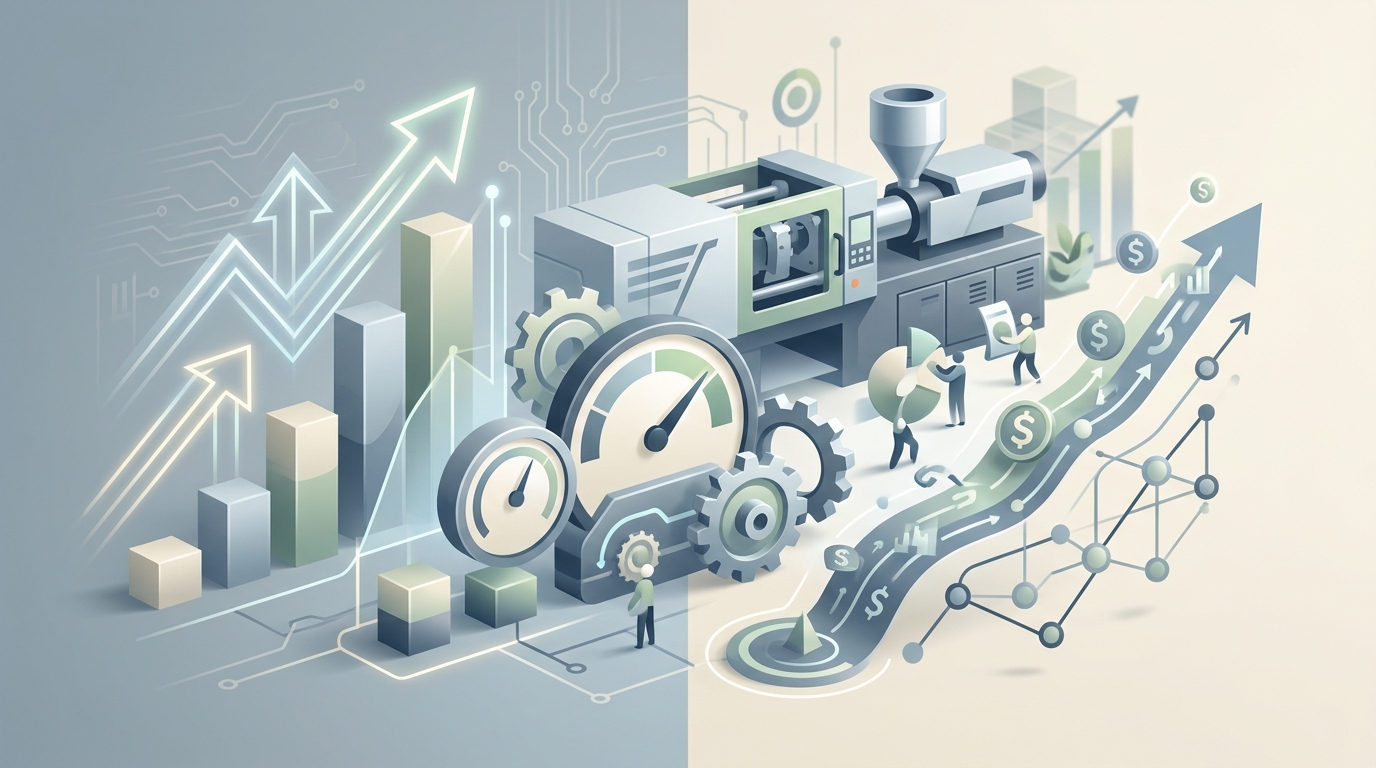
For the injection molding sector, these data points reflect a "wait-and-see" approach that can be dangerous for long-term competitiveness. When you delay a machine upgrade or a new capacity expansion, you aren't just saving on interest expenses; you are also potentially sacrificing energy efficiency, cycle times, and the ability to accept high-margin, complex orders. In a tight credit environment, your cost of borrowing is higher, but the cost of obsolescence—running inefficient, older machines—often rises faster than the interest rate.
For many facilities, the current credit climate requires a shift in procurement strategy. Rather than relying on traditional bank lines that may be tightening their lending criteria, savvy operators are looking toward equipment-specific financing partners. These specialized lenders often focus more on the asset’s collateral value and your specific production history rather than generic credit scores, potentially offering better terms even when the broader market is cooling.
If you are evaluating new machinery, now is the time to stress-test your cash flow against higher interest rates while exploring lease-to-own options or 100% financing structures that preserve working capital. Avoiding unnecessary CapEx is wise, but starving your facility of the technology needed to keep utilization rates above that long-run average can create a downward spiral of declining margins.
Bottom line
Manufacturing output and capacity utilization remain stagnant as businesses pull back on capital investments due to high-interest-rate pressures. While caution is justified, ignoring essential equipment upgrades can erode your competitive advantage during this slowdown.
Check your financing eligibility and see current rates for injection molding machinery here.
Disclosures
This content is for educational purposes only and is not financial advice. injectionmoldingfinancing.com may receive compensation from partner lenders, which may influence which products are featured. Rates, terms, and availability vary by lender and applicant qualifications.
What business owners say
4.9-
This company was lightning fast and the experience was amazing. Thank you, Dan — you're a real pro!
-
Good service Joseph Krajewski is the best agent ever. He provided excellent service. I strongly recommend working with him if you have the opportunity.
-
They gave me a chance when nobody else would. I'm very satisfied.
Frequently asked questions
Why is manufacturing output currently stagnant?
Federal Reserve data and ISM reports indicate that persistent high interest rates have dampened capital expenditure, causing manufacturing output to flatten and capacity utilization to drop below historical averages.
How does the current PMI contraction affect equipment financing?
A contractionary PMI often signals that businesses are holding back on major investments. For equipment financing, this means lenders may be more cautious, making it essential for manufacturers to have strong financial profiles when seeking capital for machinery upgrades.
Should I wait for interest rates to drop before financing new injection molding machines?
While waiting can seem prudent, delayed investment can also lead to inefficiencies and lost competitive advantage. Discussing financing options now with specialized lenders may reveal alternative structures—like equipment leases or tailored loans—that can help preserve cash flow even in high-rate environments.
- Injection Molding Financing Services: 2026 Company Profile (16/09/2026)
- Contact Us – Your First Step to Fast Injection Molding Equipment Financing (16/09/2026)
- Mastering Injection Molding Equipment Financing (MCP): A 2026 Guide (08/09/2026)
- Understanding Rails Configuration: A Practical Guide for Injection Molding Equipment Financing Professionals (10/08/2026)
- PMS for Plastic Manufacturers: 2026 Guide to Choosing a Procurement Management System (10/08/2026)
- How to Fix 404 Errors on Your Injection Molding Financing Site – 2026 Guide (10/08/2026)
- How to Build a Real‑Time Equipment‑Financing Dashboard for Injection Molding Shops in 2026 (08/08/2026)
- Understanding Log Viewer Logs for Injection Molding Equipment Financing (2026 Guide) (08/08/2026)